
Plants For Birds

Restoring native plant habitat is vital to preserving biodiversity. By creating a native plant garden, each patch of habitat becomes part of a collective effort to nurture and sustain the living landscape for birds and other animals.
Native plants are those that occur naturally in a region in which they evolved. They are the ecological basis upon which life depends, including birds and people. Without them and the insects that co-evolved with them, local birds cannot survive.
For example, research by entomologist Doug Tallamy has shown that native oak trees support over 500 species of caterpillars whereas ginkgos, a commonly planted landscape tree from Asia, host only 5 species of caterpillars. When it takes over 6,000 caterpillars to raise one brood of chickadees, that is a significant difference.
Bird Friendly Blooms
Bird-Friendly Blooms is a comprehensive partnership between Audubon chapters and green industry partners including garden centers, nurseries, and landscapers, in an effort to make native plants more accessible to local communities.
Appalachian Audubon Society Currently Partners with:
Audubon PA originally created the annual Birdy Dozen. It features six flowering plants, three shrubs, and three trees native to the Mid-Atlantic region that support birds, insects, and other wildlife. After Audubon PA’s merging with Audubon Mid-Atlantic, the Birdy Dozen program ended. Appalachian Audubon decided to champion the effort to bring back the Birdy Dozen in 2025! These plant suggestions will attract songbirds, pollinators, butterflies, and hummingbirds, providing food, shelter, and necessary resources for wildlife to raise young. Please see the featured plants below, seek them out for your own garden, and ask your favorite nurseries to stock them!
2026 Birdy Dozen
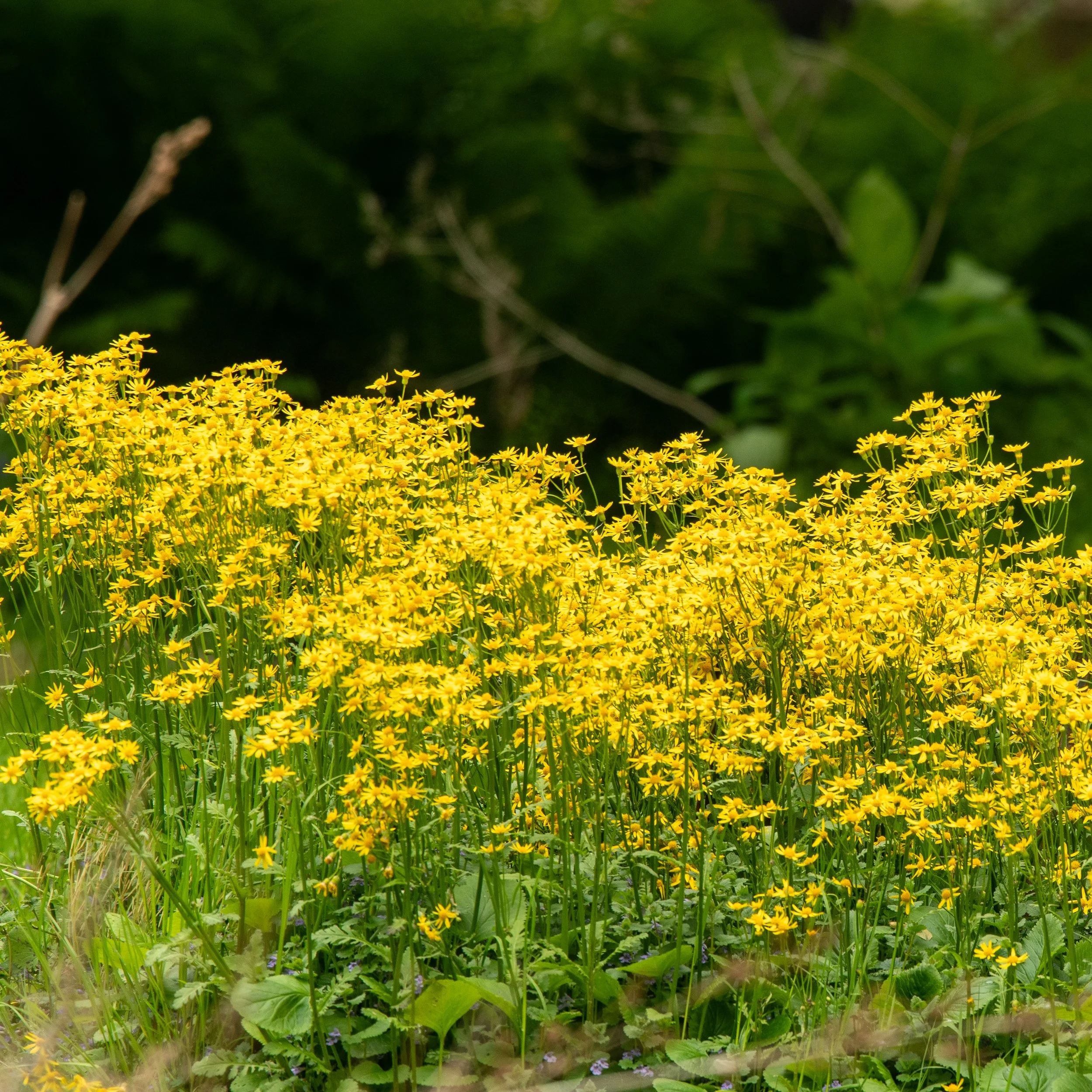
Golden Groundsel (Packera aurea)
Jean Barrell/Flickr (CC BY 2.0)
GOLDEN GROUNDSEL
(Packera aurea)
Height: The leaves provide a short groundcover, while the flowers may extend 1-3 feet above the foliage. Space: Golden groundsel can form large mats
Light needs: Grows in part shade to full sun
Moisture/Soil needs: Prefers moist, acidic soil but quite adaptable
Bloom color/time: Deep yellow, daisy-like, 3/4” wide, on erect stems. Early spring.
This native plant creates a delightful ground cover with leaves being dark green on top and purplish below. A side benefit is that these leaves can remain evergreen through our local winters. The bright yellow flowers serve to brighten a woodland setting and they are attractive to bees such as little carpenter bees, cuckoo bees and halictid bees. The flower stalks can be trimmed off after flowering to keep the plant looking neat. The foliage is toxic and generally left alone by browsing animals. The pappus (fluff) of seedheads can be used by hummingbirds to line their nests.
COMMON BLUE VIOLET
(Viola sororia)
Height: 6-10 in., Space: Will self-seed in optimum conditions and function as a low maintenance ground cover
Light: Grows in sun or part shade
Moisture: Prefers moist soil
Bloom color/ time: Various shades of blue, purple and white which bloom in March, April, May
This member of the Violet family has glossy, heart-shaped leaves. The flowers are numerous and conspicuous. The leaves are high in vitamins A and C and can be added to salads or cooked, or made into candies and jellies. Because they bloom so early, the flowers are an important source of nectar for the first pollinators. The plants also provide a food source for butterfly larvae, deer, rabbits and wild turkeys.

Common Blue Violet (Viola sororia)
Dendroica cerulea/Flickr (CC BY-NC-SA 2.0)
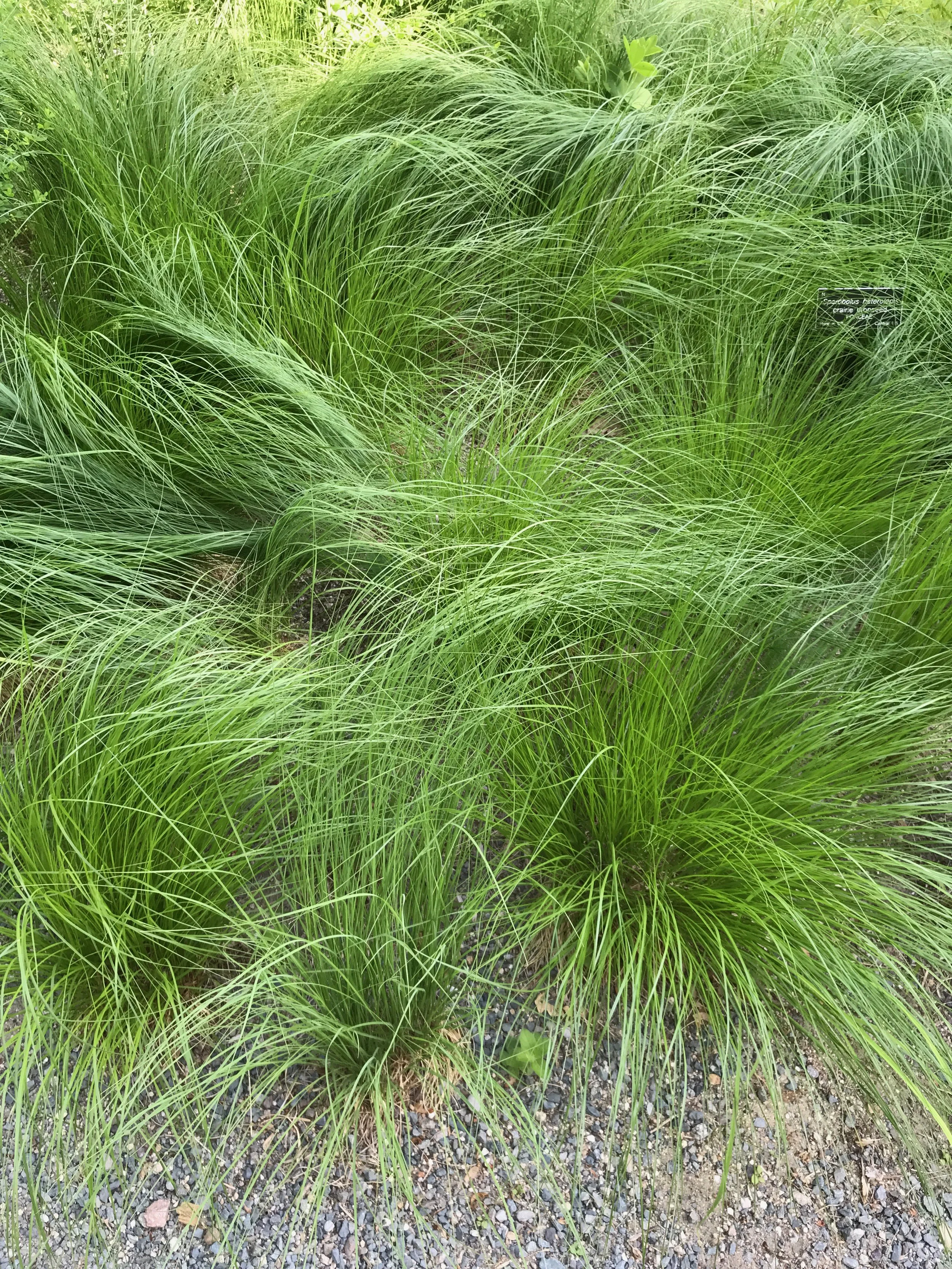
Prairie Dropseed (Sporobolus heterolepis)
CZM/Flickr (CC BY-NC-SA 2.0)
PRAIRIE DROPSEED
(Sporobolus heterolepis)
Height: 1.5- 3 ft., Space: Up to 3 ft. wide at maturity
Light needs: Full sun to part shade
Moisture/soil needs: Thrives in dry, well-drained soil
Bloom color and time: In late summer, an airy, white-colored inflorescence rises above the leaves. The plant has pretty fall color and tan seed heads. Inflorescence has an interesting scent, reminiscent of popcorn.
This is a long-lived, drought-tolerant perennial grass which will thrive in soil of low fertility in hot sun. It can be used as a ground cover or an accent plant. The dense foliage provides shelter for birds and small creatures. The seeds provide a valuable food source for song birds such as dark-eyed juncos and sparrows. Native bees and other beneficial insects can use the foliage for nesting structures. It is largely unbothered by deer and rabbits.
NEW ENGLAND ASTER
(Symphyotrichum novae-angliae)
Height: Grows up to 6 ft., Spacing: 2-3 ft. when mature ( can be pinched back to stay shorter)
Light needs: Full sun to light shade
Moisture/soil needs: Prefers moist, rich, well-drained soil, but is adapable
Bloom time/Colors: Blooming from late August to October, these asters are beautiful shades of purple, blue, pink or violet
This tall, showy, perennial is a delight in the garden. The daisy-like flowers are abundant and a nice contrast to the many yellows and golds of the season. At 1.5” wide, the flowers serve late pollinators like bees and butterflies, especially Monarchs, with a valuable source of nectar. It is common to see the whole plant buzzing with happy bees. New England Asters are also larval hosts for the Pearl Crescent butterfly and the Wavy-lined Emerald moth.
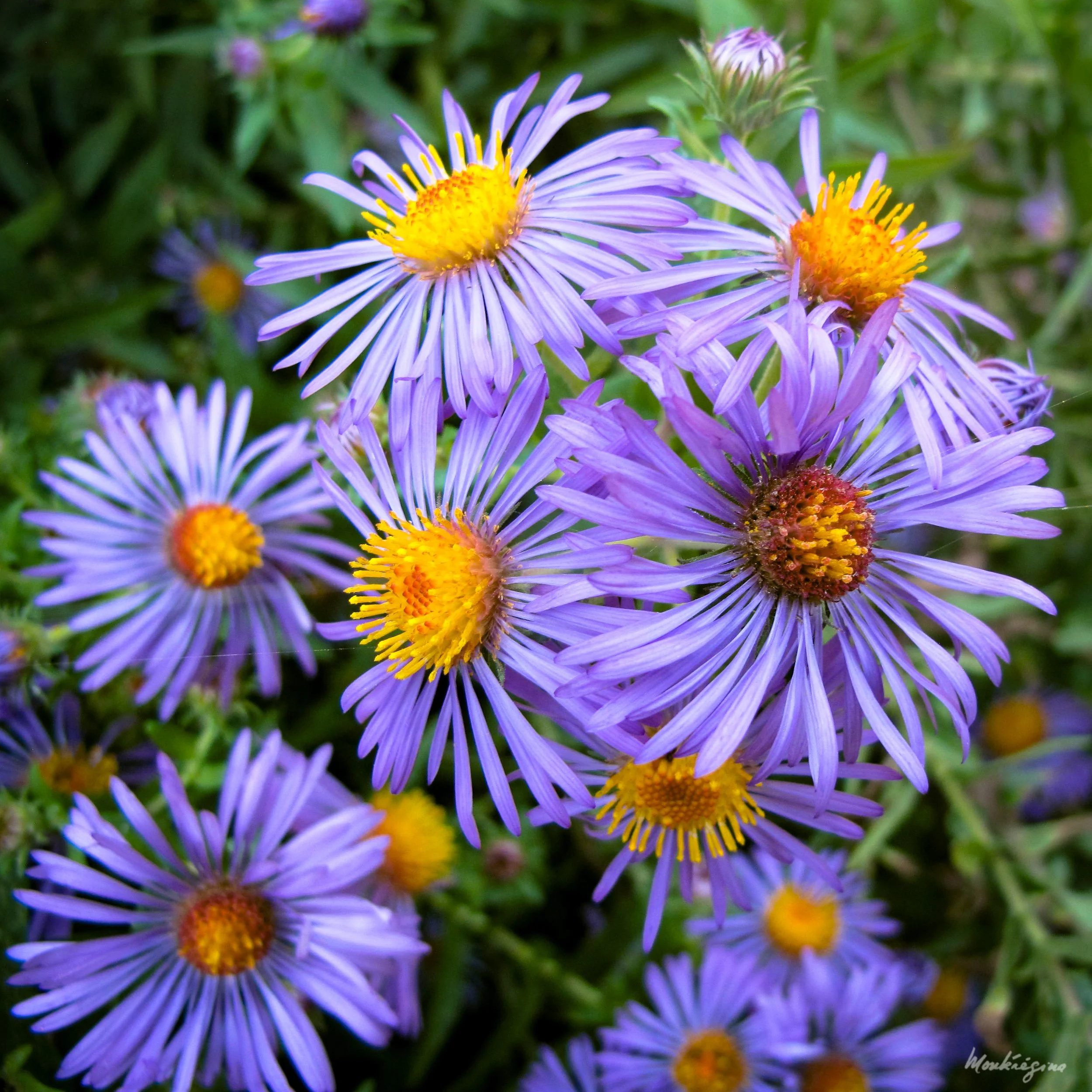
New England Aster (Symphyotrichum novae-angliae)
Monteregrina (Nicole)/Flickr (CC BY-NC-SA 2.0)
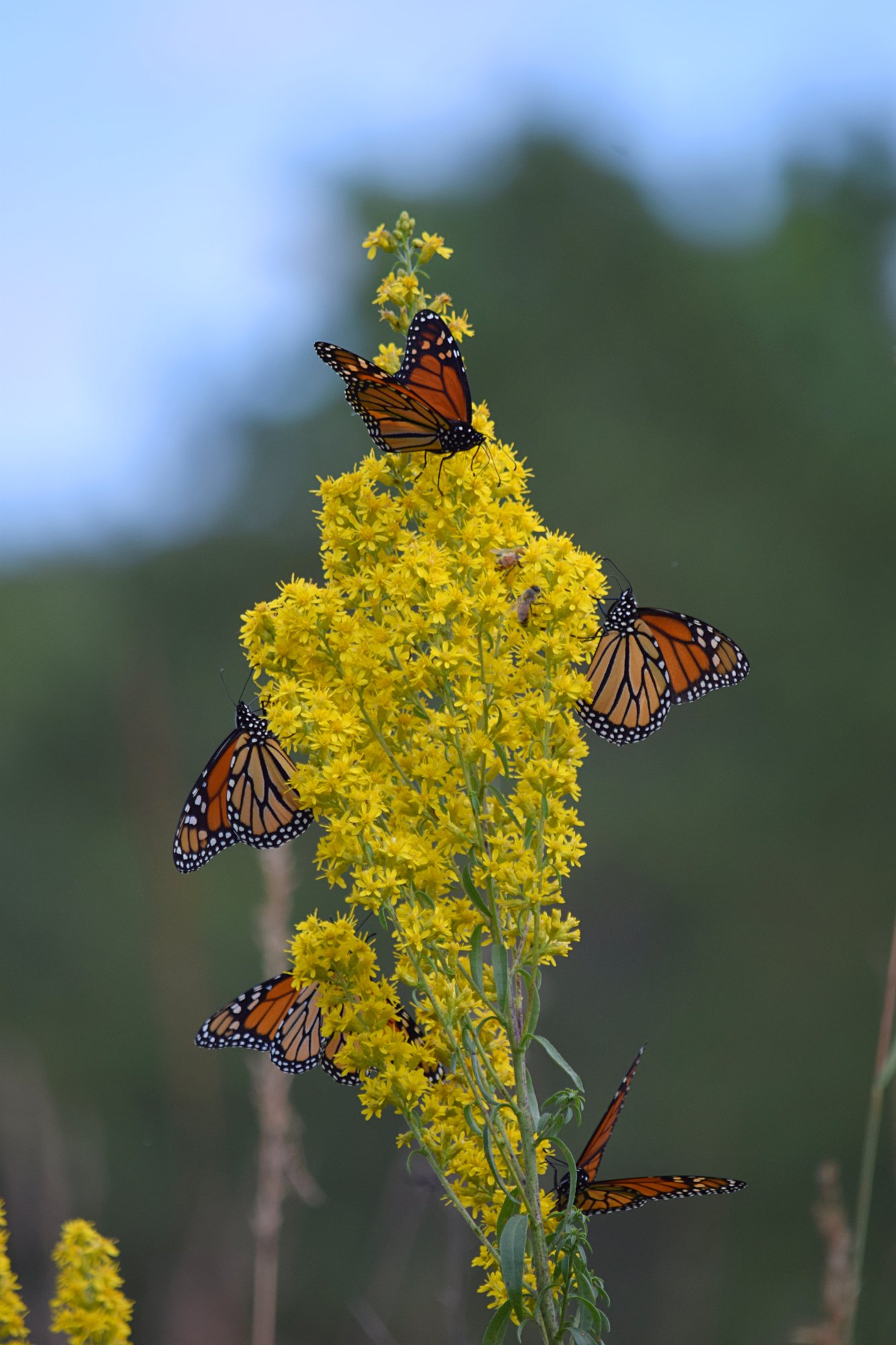
Showy Goldenrod (Solidago speciosa)
Peter Gorman/Flickr (CC BY-NC-SA 2.0)
SHOWY GOLDENROD
(Solidago speciosa)
Height: Grows 3-5 ft. tall, Spacing: 2-3 ft. wide at maturity
Light: Full or partial sun needed
Moisture/soil needs: Slightly moist to dry, well-drained soil
Bloom Color/ Time: Dense, deep yellow flower inflorescence up to 1’ long on upright stalk. Blooms during late summer to early fall.
This flower is attractive to bees, beetles, birds and butterflies, providing a bold example of color in the late summer garden. It can spread via creeping rhizomes but it is not considered aggressive. Showy Goldenrod tolerates poor soils and can withstand drought once established. Deer resistant, it has no serious pests or diseases.
FOXGLOVE BEARDTONGUE
(Penstemon digitalis)
Height: 3-5 ft., Spacing: plant 12-18” apart
Light needs: Grows in sun or part-shade; very adaptable
Moisture/soil needs: prefers medium to dry soil but is tolerant to variation
Bloom Time/ Color: Clusters of white, tubular flowers on upright stems in May, June, July
Also called Smooth Beardtongue, this clumping perennial is a valuable food source for bees, butterflies and hummingbirds. It has a special value for native bees such as miner bees and mason bees. It is a host plant for the Common Buckeye and Baltimore Checkerspot butterflies. The leaves are glossy and can be evergreen. For the most part, it is ignored by deer and rabbits.
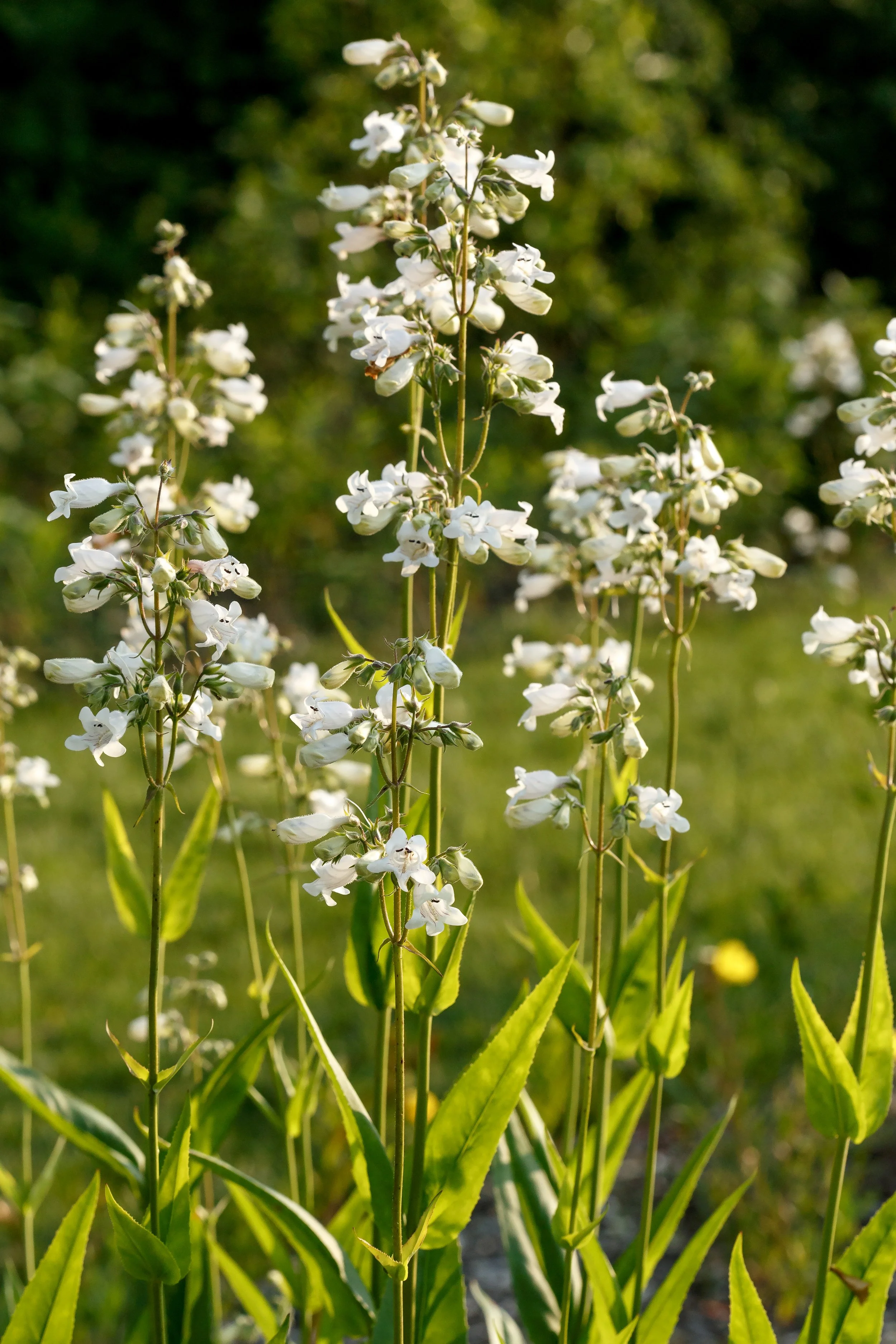
Foxglove Beardtongue (Penstemon digitalis)
Tom Potterfield/Flickr (CC BY-NC-SA 2.0)
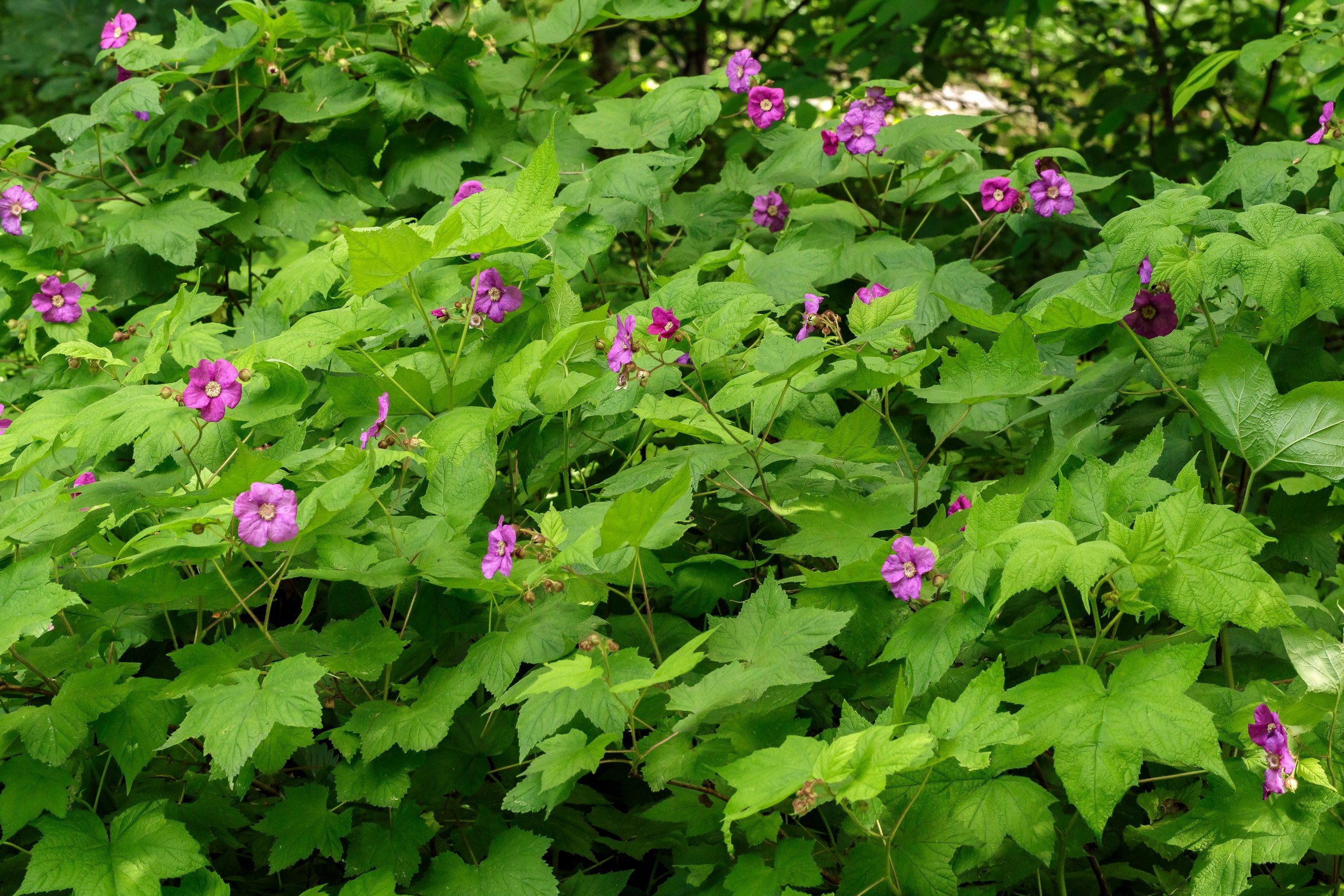
Flowering Raspberry (Rubacer odoratum)
Tom Potterfield/Flickr (CC BY-NC-SA 2.0)
FLOWERING RASPBERRY
(Rubacer odoratum)
Height: to 6 ft., Spacing: 6-12 ft. wide, often forming thickets
Light needs: Part-shade or full sun with adequate moisture
Moisture/soil needs: Likes moist and well-drained soil. Adaptable to various pH levels.
Bloom color and type: The fragrant purple flowers are 1-2” wide, born in clusters at stem ends. Flowers are staggered throughout the summer.
A suckering and densely multi-stemmed, flowering shrub, this is a member of the Rose family. The flowers later develop into 3/4” red raspberry fruits, edible but with a less-intense flavor. The berries do feed song and game birds and small mammals. The flowers provide nectar and pollen for various pollinators and some bees use the foliage for nesting. The leaves turn a pale yellow in fall. This is an excellent choice for summer blooms in a shade garden.
NORTHERN BAYBERRY
(Morella pensylvanica)
Height: 5-10 ft. tall, Spacing: 8 ft wide on average
Light needs: This shrub grows in full sun to filtered shade
Moisture needs: Bayberry prefers dry, acidic soils, but will tolerate neutral pH
Bloom color/time: In mid-spring, inconspicuous yellow flowers, followed by waxy, white fruits which remain all winter
The drupes of this deciduous shrub have a high lipid count, which is very important for the nutrition of migrating birds. They are toxic to humans, but often eaten by not only songbirds, but also game birds and shore birds. The Northern Bayberry is native to Eastern North America, from Canada to Virginia. It can be semi-evergreen in warmer climates. It is generally found growing in open, sandy soils with lots of sun. The plant fixes nitrogen in soils. Mature plants provide good cover for birds and other small creatures. A male and a female plant are required for berry production. A favorite of Eastern Bluebirds and Yellow-rumped Warblers in the winter!

Northern Bayberry (Morella pensylvanica)
Derek Hudgins/iNaturalist (CC BY-NC 4.0)
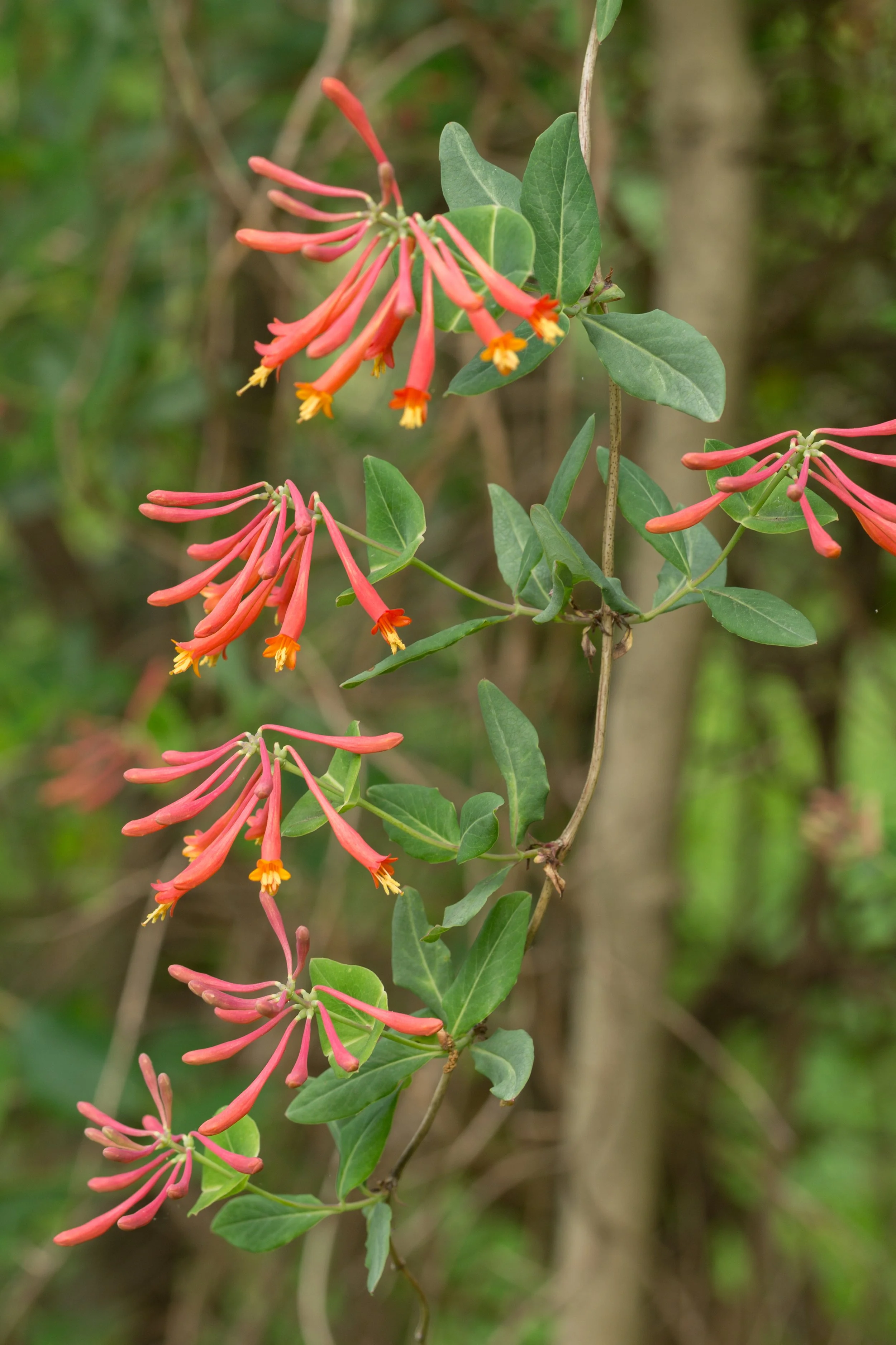
Coral Honeysuckle (Lonicera sempervirens)
dogtooth77/Flickr (CC BY-NC-SA 2.0)
CORAL HONEYSUCKLE
(Lonicera sempervirens)
Height: Grows 10-20 ft., Spacing: Will climb and twine over vertical supports, great for arbors
Light needs: Full sun for best flowering but will grow in partial shade
Moisture/soil needs: Average to moist soil
Bloom color/time: The vine blooms heavily in spring and then sporadically after that until frost
This member of the Honeysuckle family bears clusters of brilliant red, tubular flowers about 2” long. The blooms have a yellow inner throat. Very pretty as an ornamental, it benefits wildlife such as bees, butterflies and hummingbirds with its sweet nectar. Also, many songbirds prefer to eat the small red berries produced after the flowers fade. The vine is a host plant for the Spring Azure butterfly and Snowberry Clearwing moth.
DOWNY SERVICEBERRY
(Amelanchier arborea)
Height: up to 25 ft., Spacing: plant 15-20 ft. apart
Light needs: Will grow in sun or part shade, but will be fuller in more sun
Moisture/soil needs: Requires well-drained soil, whether dry or moist
Bloom color and time: Among the first trees to bloom in early spring. White, fragrant, drooping bunches of flowers followed by red berries which darken as they ripen.
This very hardy and adaptable small tree is in the Rose family. Two qualities make it very desirable for birds. One is the large variety of insects which are attracted to pollinate it. The other is the fact that the birds flock to the berries! The tree has three-season interest, with clouds of white flowers in early spring and eye-catching, dramatically colored leaves in fall. The hard and heavy wood of the Amelanchier species was traditionally used for making tool handles.
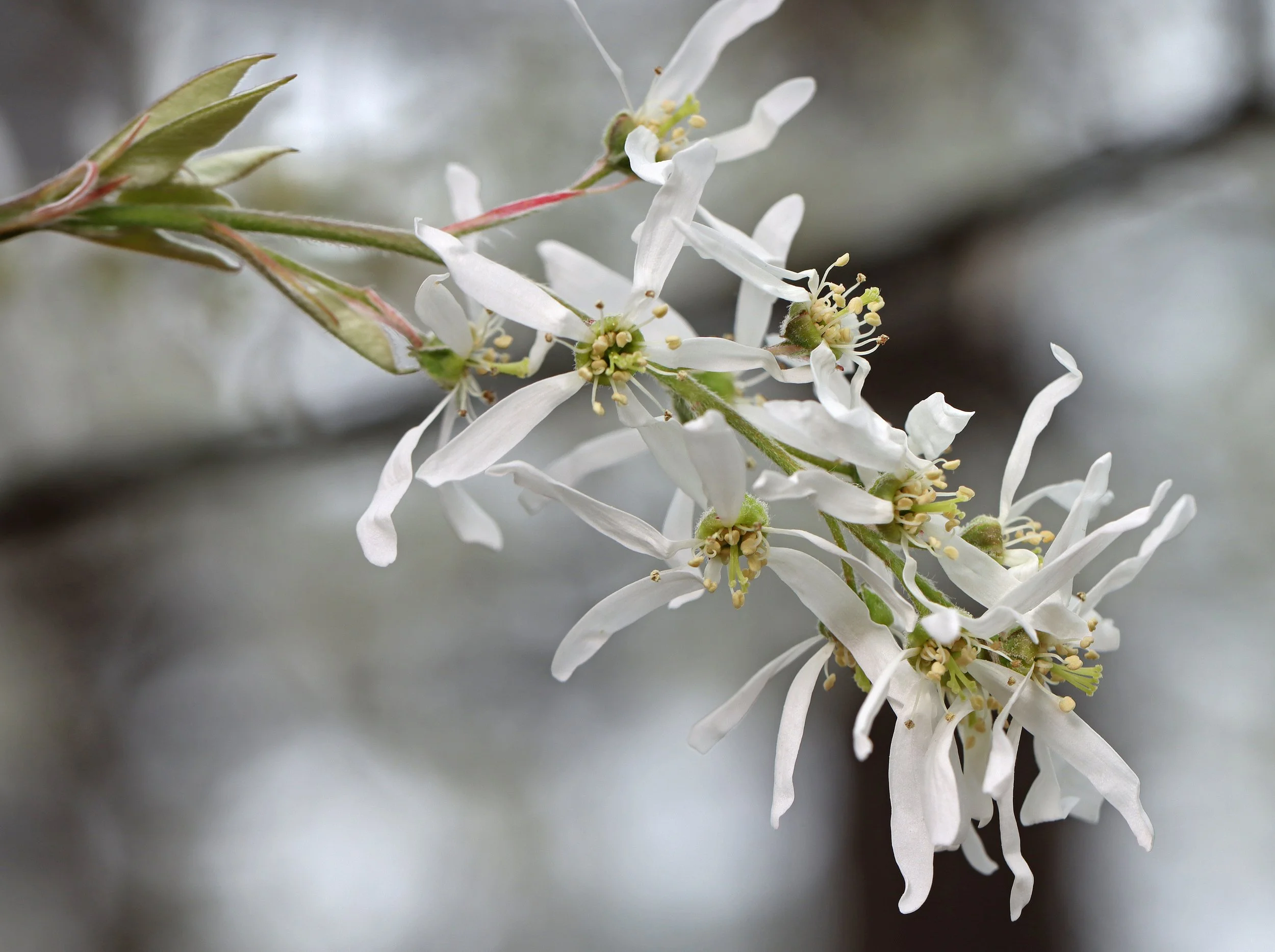
Downy Serviceberry (Amelanchier arborea)
Philip Bouchard/Flickr (CC BY-NC-ND 2.0)
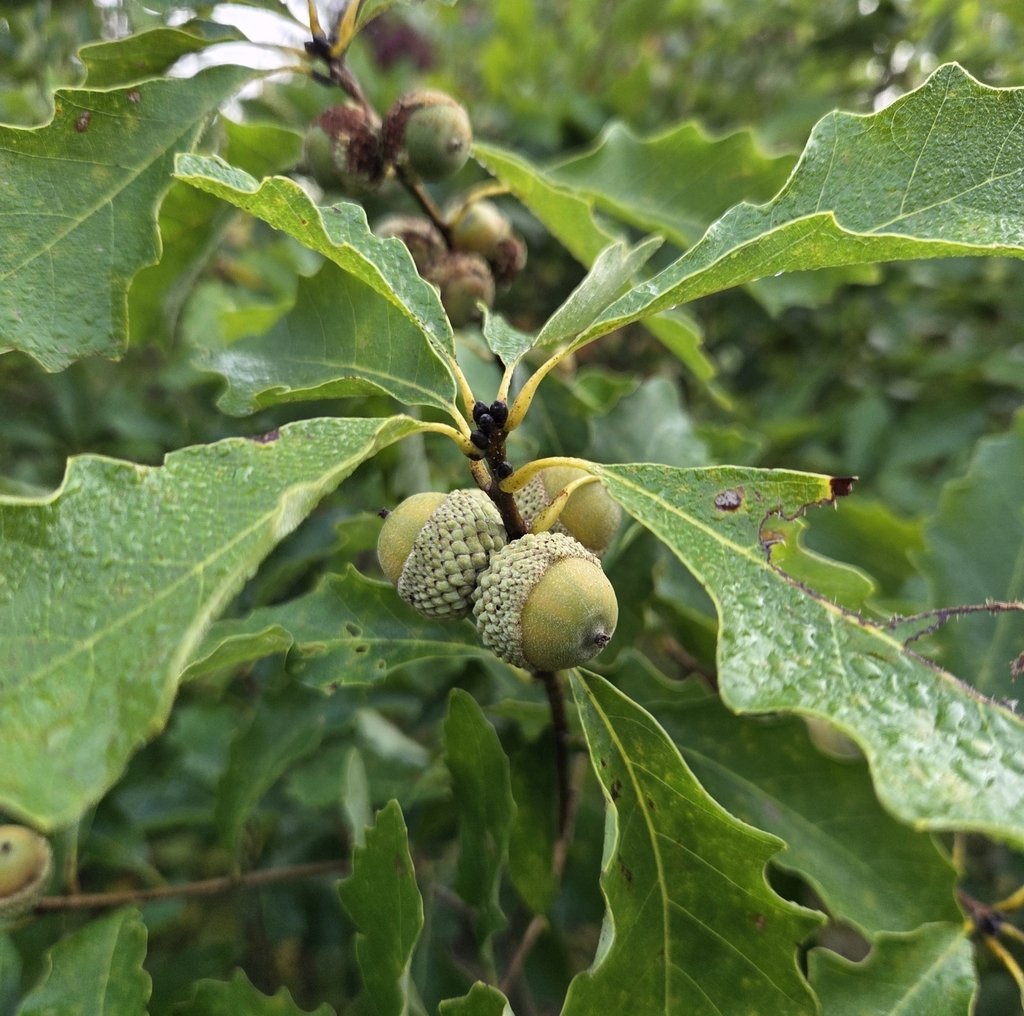
Dwarf Chinkapin Oak (Quercus prinoides)
Joe Sebastiani/iNaturalist (CC BY-NC 4.0)
DWARF CHINKAPIN OAK
(Quercus prinoides)
Height: 2-12 ft., Spacing: 10-15 ft.
Light needs: Full sun or partial shade
Moisture/soil needs: This tree thrives in poor, dry soils
In the Fagaceae (Beech) family, this is a suckering shrub or small, native tree which requires only 10-15 feet of space. It is a tough, drought-tolerant species, excellent for supporting wildlife in a limited space. These oaks start bearing their nuts early, at only 3-4 years old and produce a consistently good crop most years. The acorns are sweet, 1/2-3/4” long with a thin, bowl shaped cap. This is a vital source of food, loved by deer, turkeys, squirrels and chipmunks. Also, as a keystone species, this oak serves as a host for many butterflies and moths.
AMERICAN HOP-HORNBEAM
(Ostrya virginiana)
Height: Usually under 30 ft., Spacing: 25 ft. wide
Light needs: Will grow in sun or shade but crown will be broader in sun
Moisture/ soil needs: Likes rich, well-drained soil, whether dry or moist. Will not tolerate flooding and is very sensitive to salt.
Bloom color and type: Flowers are inconspicuous, appearing April or May. Later, seeds are arranged in clusters in papery, hop-like sacs, 1.5 - 2.5 “ long.
This tough, understory tree is a slow-growing member of the Birch family, and has beautiful, birch-like leaves. It is resistant to many disease and insect problems. Included in its wildlife value are the buds and nutlets, eaten by some birds, including grouse and pheasants, and small mammals. Dried seed clusters often remain on the tree through winter, providing visual interest. It is also called ironwood due the hardness of the wood, which was sometimes used for sleigh runners.
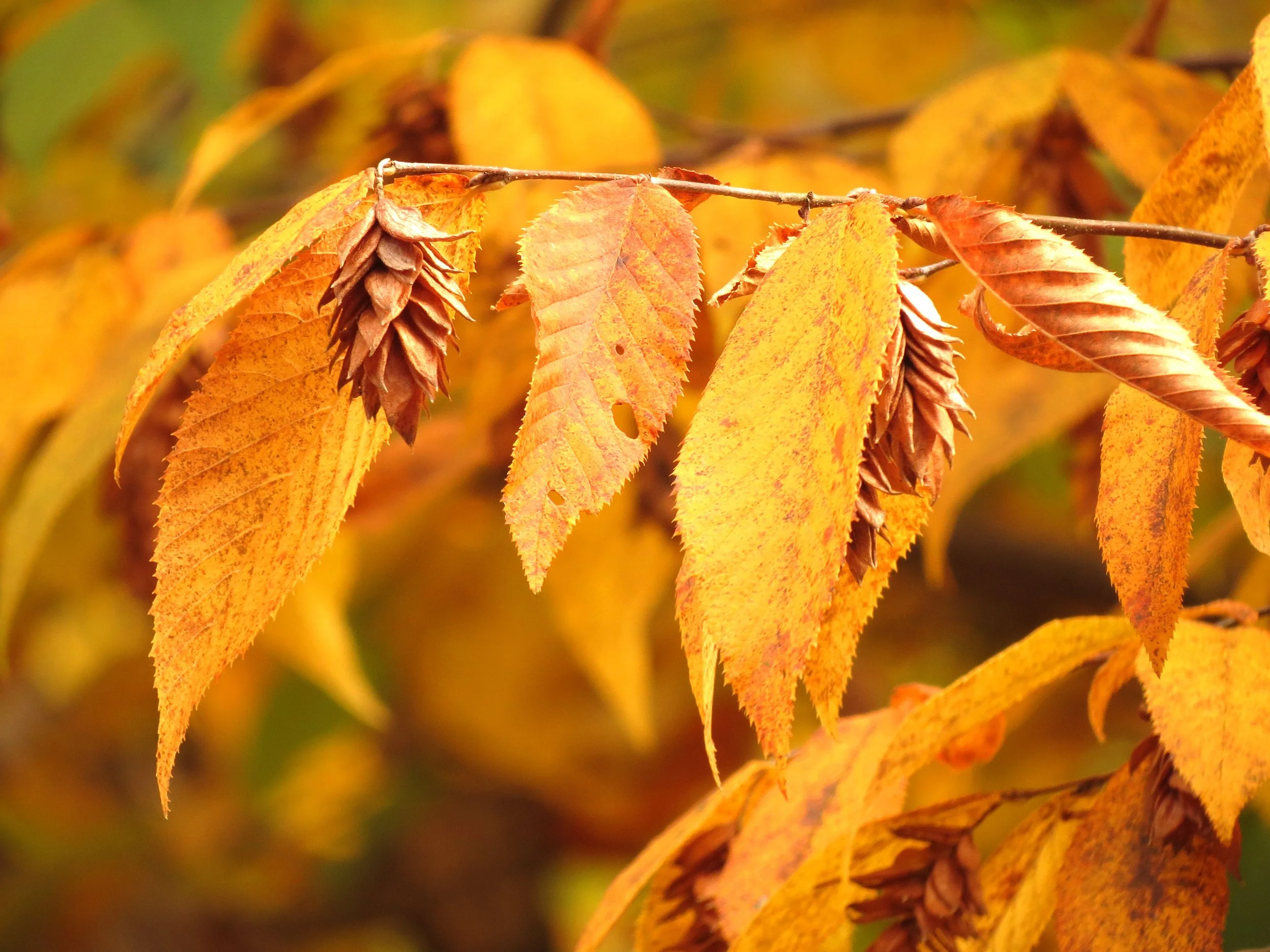
American Hop-Hornbeam (Ostrya virginiana)
Katja Schulz/Flickr (CC BY 2.0)
Download the 2026 Birdy Dozen (feel free to print off and share with friends and nurseries!)
2026 Rack Card 2026 Poster
Find Previous Birdy Dozen Lists Here:
How to Build a Native Plant Garden

Want to learn more about creating a native plant garden?
Check out these resources:
The Department of Conservation and Natural Resources: Native Garden Templates
DIY Garden Designs | Audubon Pennsylvania
Home - Wild Ones South Central Pennsylvania Chapter
How to build a pollinator garden | U.S. Fish & Wildlife Service (fws.gov)
Join the Bird Friendly Habitat Community Today

Plant: Create your bird-friendly habitat using the four elements of food, water, shelter, and nesting sites. Not sure what that looks like? Check out our guide, 4 Tips for a Bird-Friendly Habitat or start with our sample garden plans.
Register: Tell us about the Bird-Friendly Habitat at your home by completing the application (online or by mail). Enrollment requires a one-time $25 donation that provides a yard sign for you and sustaining support for the program.
Showcase: Shine a light on your efforts by posting your Bird-Friendly Habitat yard sign. It can spark neighborhood conversations that result in more people adding more healthy habitat.
Inspire: Share your story and spark action in others. Tag us on social media (@AudubonPA), join our Facebook Group (coming soon), or send us your story by email. A picture says a thousand words so be sure to include a few to share.